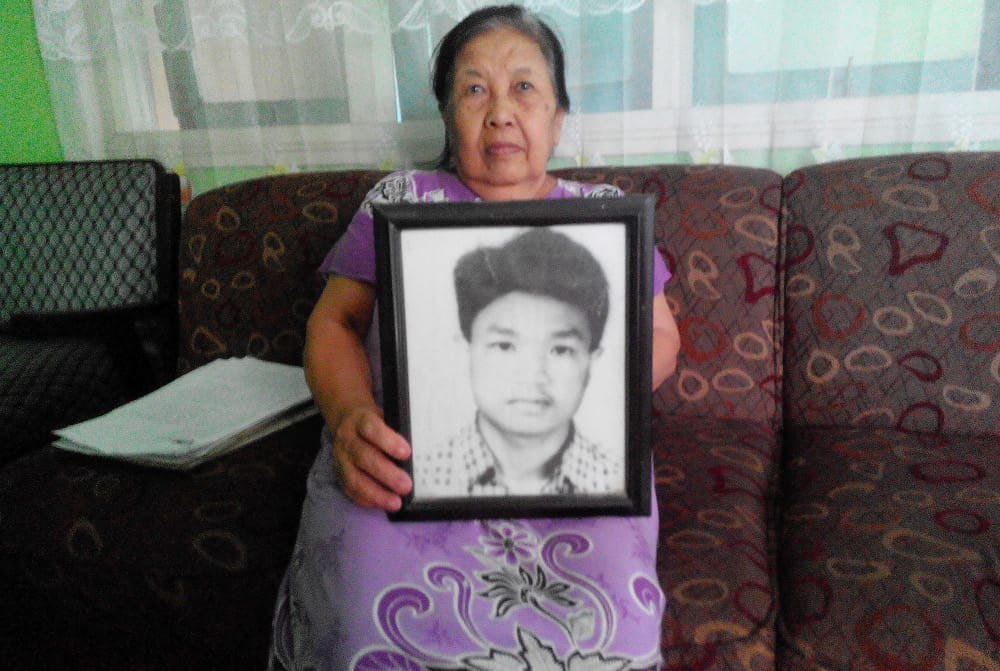
We, the undersigned organisations, collectives, and individuals across the world, express our deep concern regarding the prosecution of Laras Faizati, a young Indonesian woman and dedicated worker supporting her family, who is currently standing trial at the South Jakarta District Court for her social-media expression following the death of ride-hailing driver Affan Kurniawan during the Indonesian Nationwide Protest in August 2025.
Background
The case against Laras stems from posts she uploaded in her Instagram Account on 28 - 29 August 2025, shortly after Affan Kurniawan was fatally struck by a police tactical vehicle during the protests of late August. Angered by this incident, Laras posted four pieces of content on her Instagram account, including videos circulating widely in the public domain as well as a photograph of herself pointing toward the National Police Headquarters. The content expressed her grief, frustration, and criticism toward the police’s handling of the incident that resulted in Affan’s death. These posts were later reported to authorities on allegations of “incitement” and “hate speech,” prompting her arrest by the Criminal Investigation Department on 1 September 2025, only three days after her posts and despite her full cooperation.
Her trial began on 5 November 2025 with the reading of charges under Article 161 paragraph 1 of the Indonesian Criminal Code. Throughout multiple hearings, including witness examinations in late November, prosecutors asserted that Laras’s posts constituted intentional acts encouraging hostility toward the police.
However, on 24 December 2025, the prosecution demanded a one-year prison sentence, despite the fact that Laras has no prior criminal record, has shown full cooperation, and serves as the principal provider for her family. The prosecution itself acknowledged that she had already faced employment consequences. Yet her expression of grief and anger, in which sentiments shared widely across the public sphere during that period, has been framed as a criminal act.
Not only that Laras is being prosecuted unfairly, in one of her interviews, she also mentioned how the investigators treated her inhumanely. She mentioned how the police were mocking her for being here (in prison), and that was the cause of why her mother is sick. The police also gave her expired medicine and she cannot access the health facility easily.
The proceedings against Laras have raised significant concerns among human-rights bodies, legal experts, and civil-society groups, whereas arguments underlined that Laras is facing criminalisation for speech that, in the context of public outrage and widespread mourning, amounted to emotional expression and political commentary rather than incitement to violence. The Indonesian Police Reform Acceleration Commission also publicly highlighted Laras’s case, urging the national police leadership to re-evaluate the legal process applied to over a thousand individuals arrested during the August events, especially women, minors, and persons with disabilities.
During Laras' verdict on 15 January 2026, the judge called for a six-month prison sentence; however, Laras instead received a one-year probation, meaning she will not serve time in prison but will remain under supervision for a year. In delivering the decision, the presiding judge stated that the words used by Laras in her posts were “filthy and vile,” and further argued that although expressions of anger in public spaces such as social media are natural, the wording she chose rendered her statements “manipulative.” Based on this reasoning, the court still deemed her posts as “inciting others to commit crimes”.
This decision dealt a serious blow to freedom of expression and peaceful protest in Indonesia, as the judges missed an opportunity to correct the flawed legal process used by police and prosecutors who rely on problematic articles to criminalize citizens and activists voicing criticism. This also marks the broader flaws within Indonesia’s justice system, where public resentment toward the government did not begin with a single Instagram story, but with the authorities’ incompetence in handling the mass protests in August last year. To date, more than 600 political prisoners remain on trial following the August 2025 protests.
Targeting a Young Woman for Dissent: The Gendered Cost of Repression
Laras is a young woman who, in essence, has become a victim of an increasingly repressive government. As in any democracy, her expressions and aspirations reflected a deep concern for the state of her country, yet instead of evaluating the institutional failures she criticised, the authorities chose to punish a citizen whose words were rooted in care for the nation’s future. Her decision to speak out following Affan’s death was not an isolated act of defiance but part of her broader commitment to confronting structural inequality, the commitments that have made her an accessible and relatable figure for many young women in Indonesia.
The criminalisation of Laras not only reveals the justice system’s failure to consider power imbalances, victims’ vulnerabilities, and fundamental human-rights protections, particularly women’s rights, but also sends a chilling message to women and other marginalised groups seeking to speak in public and digital spaces. If left unchallenged, this will further shrink the space for freedom of expression and hinder efforts to expose violence and injustice.
Laras’s case is not an isolated one
Her trial reflects a broader pattern of the criminalisation of youth voices in Indonesia following the August 2025 demonstrations. Several other young people, among them Delpedro Marhaen, Khariq Anhar, Muzaffar Salim, Syahdan Husein,and Similarly Rifa Rahnabila –the only woman among the 46 political detainees in Bandung after the August 2025 protest– who have been subjected to similarly questionable arrests, extended detentions, and legal processes. Their cases collectively signal an alarming trend in which young citizens expressing criticism of state actions, including those related to police violence, face disproportionate legal risks. These patterns raise serious questions about the protection of civil liberties at a time when Indonesia holds the Presidency of the United Nations Human Rights Council.
The silencing of critical voices, particularly young, digitally active voices, poses long-term consequences for Indonesia’s democratic health. Criminalising peaceful expression, online commentary, and emotional responses to state violence undermines public trust, weakens accountability mechanisms, and chills civic participation. This situation is especially troubling in a country that currently occupies a leadership role within the global human-rights architecture. As Indonesia presides over the UN Human Rights Council, it carries the responsibility to model a justice system grounded in transparency, proportionality, and fairness, even, and especially, when citizens criticise state institutions.
Sincerely,
Organizations
-
Asia Democracy Network (ADN)
-
The Commission for the Disappeared and Victims of Violence (KontraS), Indonesia
-
Indonesia Legal Aid Foundation (YLBHI), Indonesia
-
Indonesian Caucus for Academic Freedom (KIKA), Indonesia
-
Migrant CARE, Indonesia
-
Human Rights Working Group (HRWG), Indonesia
-
Bandung Legal Aid (LBH Bandung), Indonesia
-
Serikat Pekerja Kampus (SPK)/Union Campus Worker, Indonesia
-
Indonesian Legal Aid and Human Rights Association (PBHI)
-
The Peoples Participation, Initiative and Partnerships Strengthening Foundation (YAPPIKA), Indonesia
-
Constitutional and Administrative Law Society (CALS), Indonesia
-
Solidaritas Pekerja CNN Indonesia (SPCI), Indonesia
-
The Institute for Policy Research and Advocacy (ELSAM), Indonesia
-
Koperasi Edukarya Negeri Lestari (KEN8), Indonesia
-
Mandiri, Malaysia
-
Transnational Palm Oil Labour Solidarity (TPOLS), Indonesia
-
International NGO Forum on Indonesian Development (INFID), Indonesia
-
Indonesia Corruption Watch (ICW)
-
Kemban Kolektif, Malaysia
-
Public Virtue Research Institute, Indonesia
-
Students For Liberty Indonesia
-
Students For Liberty Chapter Yogyakarta
-
Komite IWD Tulungagung, Indonesia
-
Bangsa Mahardika, Indonesia
-
IMPARSIAL, the Indonesian Human Rights Monitor
-
Viet Tan, Vietnam
-
Center of AI and Technology for Democracy (PIKAT), Indonesia
-
Manushya Foundation, Laos/Thailand
-
Southeast Asia Freedom of Expression Network (SAFEnet), Indonesia
-
Asian Forum for Human Rights and Development (FORUM-ASIA)
-
Marsinah.ID
-
Indonesian Forum for the Environment (WALHI) - Friends of the Earth Indonesia
-
Sahabat Alam Malaysia (SAM) - Friends of the Earth Malaysia
-
Forum for Protection of Public Interest (Pro Public) Nepal - Friends of the Earth Nepal
-
Logos ID, Indonesia
-
Asia Justice and Rights (AJAR)
-
Human Rights Myanmar
-
Arus Pelangi, Indonesia
-
Digital Rights Nepal (DRN)
-
Kait Nusantara
-
Asia Democracy Network
-
Pekanbaru Legal Aid (LBH Pekanbaru)
-
Prakash Mani Sharma Academy for Public Interest Law Nepal
-
South East Asia Public Interest Lawyer (SEAPIL), South East Asia
-
Greenpeace Indonesia
-
Human Rights Online Philippines (HRonlinePH)
-
Social Justice Indonesia, Indonesia
-
LBH APIK Jakarta - Legal Aid For Women Jakarta (Indonesia)
-
Institute for Criminal Justice Reform (ICJR), Indonesia
-
Taiwan Association for Human Rights(TAHR), Taiwan
-
Borneo Komrad, Malaysia
-
HAYAT, Malaysia
-
Diversity Inclusivity Equity Malaysia (DIEM), Malaysia
-
Bandilang Itim, Philippines
-
Ruang Lawan, Malaysia
-
CIVICUS: World Alliance for Citizen Participation, South Africa
-
Puanifesto, Indonesia
-
Cambodian League for the Promotion & Defense of Human Rights (LICADHO), Cambodia
-
ARTICLE 19, United Kingdom
-
EngageMedia
-
Asian Resource Foundation (ARF), Thailand
-
Asian Muslim Action Network (AMAN), Thailand
-
Refugee and Migratory Movements Research Unit (RMMRU), Bangladesh
-
Think Inc Indonesia Legal Office
-
Asia Citizen Future Association (ACFA), Taiwan
-
Kuala Lumpur and Selan
-
Chinese Assembly Hall (KLSCAH) Civil Rights Committee, Malaysia
-
Madaripur Legal Aid Association (MLAA), Bangladesh.
-
KLSCAH Youth, Malaysia
-
MilkTeaAlliance Calendar Team, Regional
-
Jejak Kota,Indonesia
-
Women’s Rehabilitation Centre (WOREC)
-
Milk Tea Alliance Thailand
-
Civil Society and Human Rights Network - CSHRN
-
11.11.11 Belgian Coalition for International Solidarity
-
Community Self Reliance Centre (CSRC) Nepal
-
New Bloom, Taiwan
-
酷兒翻越 Queer Margins, Taiwan
-
The Cambodian Human Rights and Development Association (ADHOC) - Cambodia
-
Liga Rakyat Demokratik, Malaysia
-
Kazakhstan International Bureau for Human Rights and Rule of Law, Kazakhstan
-
Community Legal Education Center (CLEC), Cambodia
-
Maldivian Democracy Network (MDN)
-
Association for Democracy in the Maldives (ADM)
-
Progressive Voice, Myanmar
-
Taiwan Alliance to End the Death Penalty(TAEDP), Taiwan
-
Human Rights Network for Tibet and Taiwan (HRNTT)
87. Philippine Alliance of Human Rights Advocates (PAHRA)
Individuals
-
Dhia Al Uyun, Indonesia
-
Hariyadi, Indonesia
-
Shoeb Abdullah, Bangladesh
-
Sita Supomo, Indonesia
-
Wahyu Susilo, Indonesia
-
Prakash Dahal, Nepal
-
Theiva Lingam, Malaysia
-
Maria M. Dolorosa Farah Diena, Indonesia
-
Jason S Ganesan, Malaysia
-
Cecilia Anthonysamy, Malaysia
-
Fajar Santoadi, Indonesia
-
Raj Villarin, Philippines
-
Liew Xiang Xiang, Malaysia
-
Nita Roshita, Indonesia
-
Ina Irawati, Indonesia
-
Wanggi Hoed, Indonesia
-
Lisa Garcia, Philippines
-
Satria Unggul Wicaksana, Indonesia
-
Jerbert M. Briola, Philippines
-
Ikrar, Indonesia
-
Adrienne Cacatian, Philippines
-
Simoun Magsalin, Philippines
-
Meg Soriano, Philippines
-
Siti Zulaika, Indonesia
-
Parvez Alam, Bangladesh
-
Mohammad Abdus Sabu, Thailand
-
Khin, Myanmar
-
Aldi Fauzan Mawardi, indonesia
-
Linda Dewi Rahayu, Indonesia
-
Stanislaus Yangni, Indonesia
-
Sunita Mainali, Nepal
-
Sarah Lery Mboeik Piar NTT, Indonesia
-
Irmia Fitriyah
-
Ja Fuentes, Philippines
KontraS
Komisi Untuk Orang Hilang dan Korban Tindak Kekerasan